The formats that hold up on trail are no-rinse powders and clay-based cleansers, dissolvable soap sheets, no-rinse foams, and biodegradable wipes. Get one thing straight early: a "biodegradable bar" is not waterless. It still needs water to work, however natural the label reads. This guide is for day hikers, weekend backpackers, and thru-hikers who want clean hands and a clean body between water sources, without the extra weight or the mess. Here is what each option does well, which one fits your trip, and how to use it without trashing the places you came to see.
TL;DR Quick Answers
Waterless Soap
Waterless soap cleans your hands with no water and no rinsing. A drop on dry skin clumps with dirt, oil, and germs, then brushes right off and takes the grime with it. Unlike hand sanitizer, which kills some germs and leaves the residue sitting on your skin, a waterless soap physically removes it, which makes it built for trails, travel, and anywhere a sink isn't.
How it works: apply to dry hands, rub until it clumps, brush the clumps off. No water, no towel.
Why it beats sanitizer: it removes dirt, oil, and germs instead of just killing some and leaving the residue behind.
Best for: hiking, camping, travel, kids' hands, and any moment without running water.
What to look for: plant-based, biodegradable, and alcohol-free, so it won't sting or dry out your skin.
Top Takeaways
Waterless soap cleans with no water and no rinsing. Biodegradable bars and concentrates do not count, because they still need water.
No-rinse powders and clay-based cleansers are the lightest, lowest-waste pick for frequent hand cleaning.
Removing germs and grime beats killing germs and leaving the residue. A waterless soap lifts the whole layer off your skin.
Match the format to the task: powders and foams for hands, wipes or sheets for a body refresh, a little biodegradable liquid for dishes far from water.
Going waterless keeps Leave No Trace simple and trims real weight from your pack.
Most "best trail soap" lists are stacked with castile bars and concentrated liquids. They clean well, then send you hunting for a stream to rinse. Useful at camp, useless when you are dry. Truly waterless products skip the rinse entirely. If you know how soap actually works, the reason holds up: surfactants and fine clays grab oil and grime so you can wipe or brush them away, water optional.
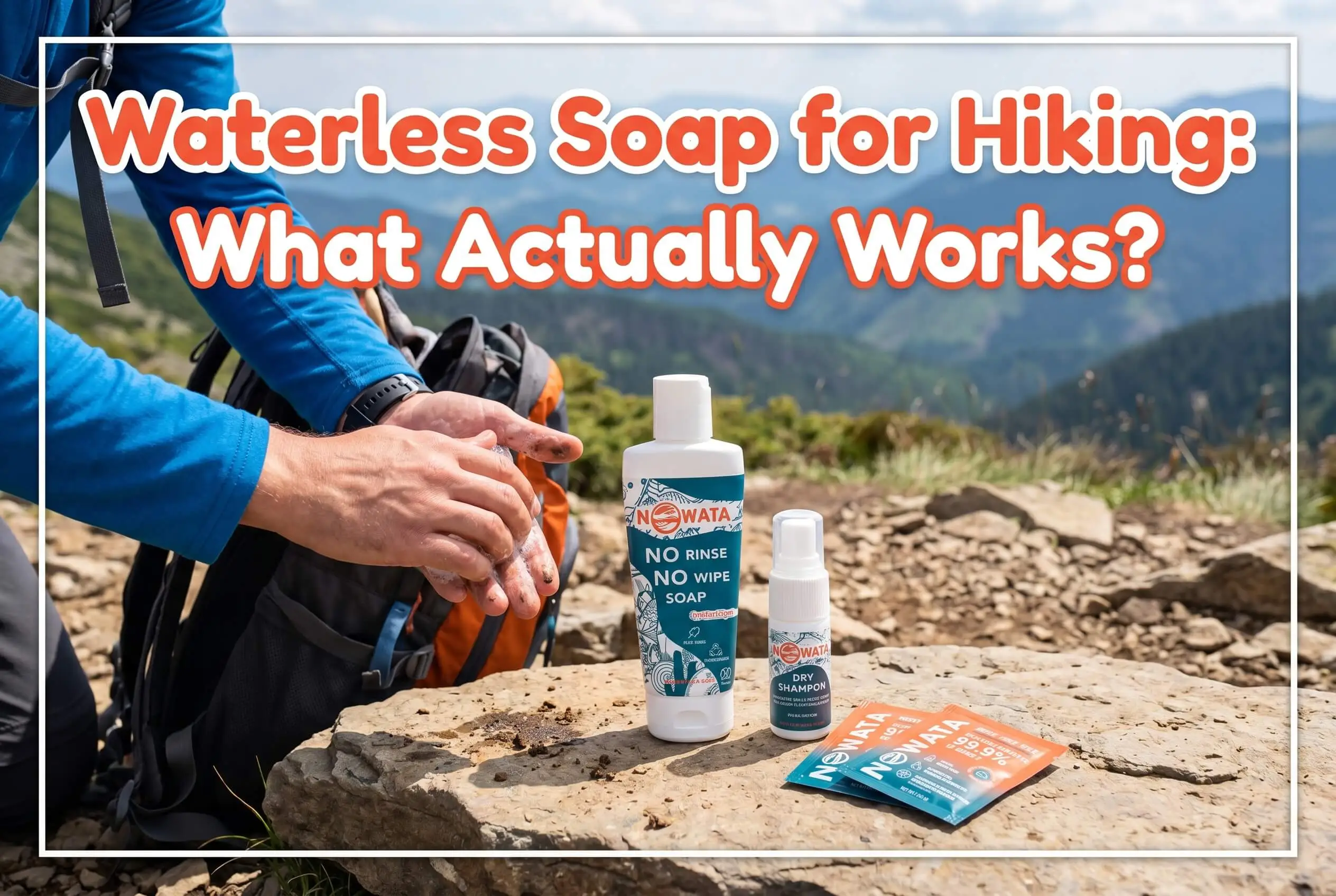
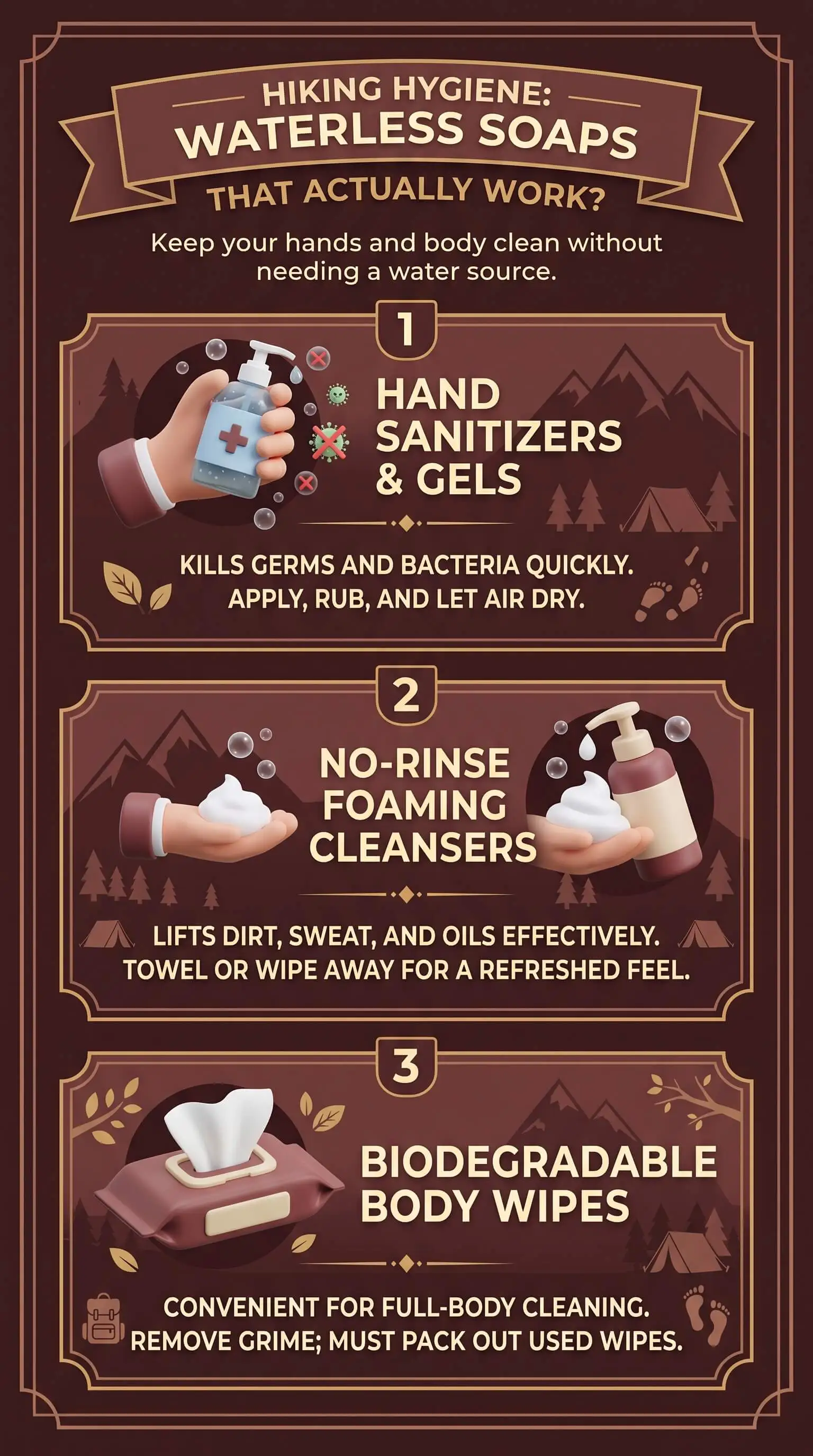
No-rinse powders and clay-based cleansers are the purest waterless pick. Put a drop or a pinch on dry hands, rub until it clumps with the dirt and oil, then brush the clumps off. They weigh next to nothing and they will not leak in your pack. Plant-based formulas built on coconut milk powder, kaolin clay, and tapioca starch clean without stripping skin that is already taking a beating from sun, wind, and sweat. A plant-based, alcohol-free option like NOWATA lives in this category. It clumps with the grime so it wipes away, it is lab-tested to physically remove more than 99.9% of the bacteria and norovirus surrogate it was tested against, and because there is no alcohol it will not sting or dry out your hands over a long trip. Safe enough for a kid's snack hands, tough enough for trail grime.
Dissolvable soap sheets are paper-thin squares that lather with the smallest bit of moisture, even damp hands. Light and tidy, but not strictly waterless, since you need a splash to get them going. They also vanish fast in heavy rain.
No-rinse foams and gels work like a leave-on cleanser and suit a quick hand reset before food. Read the label, because some are basically scented sanitizer and will dry your skin out over several days of repeated use.
Biodegradable wipes do the heavy lifting for a full-body wipe-down after a sweaty day. They clean well, but every wipe is trash you carry out, and they add weight and bulk on longer trips.
Match the tool to the job. For frequent hand cleaning between snacks and bathroom breaks, a no-rinse powder or foam is the lightest, lowest-waste choice. For a once-a-day body refresh, wipes or a sheet paired with a cloth do more. For dishes and gear, a small amount of biodegradable liquid earns its spot, used well away from water.
Here is the distinction that matters most on trail, and it is the one most products gloss over. There is a real difference between killing germs and removing them. Hand sanitizer kills some germs and leaves the dead residue, the dirt, the sunscreen, and the food smear sitting on your skin, and a few hardy bugs shrug off the alcohol entirely. A waterless soap lifts that whole layer off your hands instead. If you want to see that argument laid out, this breakdown of how hand soap handles germs is worth your time.
"After fifteen seasons guiding multi-day routes, I see the same pattern every year. The hikers who feel rough by day three are almost never the ones who skipped a shower. They are the ones who ate lunch with the hands they used after a cathole. Water is heavy and it is not always close by, so I tell every client the same thing. Carry something that cleans your hands with zero water and use it before every meal. A no-rinse soap lives in my hip belt pocket, and I reach for it more than my filter. Staying clean in the backcountry is about doing a little, often, with a product that will not quit when your water runs low."
7 Essential Resources
Leave No Trace Center for Outdoor Ethics: Dispose of Waste Properly — the authority on soap, greywater, and the 200-foot rule.
National Park Service: Leave No Trace Seven Principles — the official federal summary of responsible backcountry hygiene.
CDC: Clean Hands Facts and Statistics — the public-health case for keeping hands clean.
REI Expert Advice: Leave No Trace Principles — a hiker-focused take on low-impact washing.
USGS Water Science School: How Much Does Water Weigh? — the numbers behind why wash water adds up.
Outside: The Most Versatile Camping Soaps, Tested — independent head-to-head testing of trail soaps.
TSA: 3-1-1 Liquids Rule — what counts as a liquid when you fly to the trailhead.
3 Statistics
Better hand hygiene cuts gastrointestinal illness by about 31 percent, according to a peer-reviewed analysis of 30 community studies. That is the clearest reason to clean your hands before every trail meal, water or no water. Source: American Journal of Public Health (Aiello et al.), via PubMed
Leave No Trace guidance tells you to wash yourself or your dishes at least 200 feet from any stream or lake, roughly 70 adult steps, whether you’re camping near rocky ground, packed dirt, or comparing top flooring options for an outdoor setup. A waterless cleanser makes that easy, because you produce no rinse water to disperse. Source: National Park Service
Water weighs about 8.34 pounds per gallon, close to 2.2 pounds per liter. Every liter of wash water you leave behind is real weight off your back on a long climb. Source: USGS Water Science School
Final Thoughts and Opinion
After a lot of miles and a lot of products, my honest take is that the truly waterless category gets overlooked while the "biodegradable bar" gets too much credit for hand cleaning. Bars and concentrates have their place at an established camp with water nearby and enough soil to filter your greywater. But the small, frequent cleanups that keep you comfortable belong to a no-rinse powder or foam, which wins on weight, mess, and staying within Leave No Trace.
I will push back on one piece of common advice too. Hand sanitizer is not a real substitute. It kills some germs and leaves the visible grime, sunscreen, and food residue behind, and a few bugs shrug it off entirely. A real waterless soap lifts that material off your skin, which is much closer to what handwashing does.
If you change one habit, make it this. Clean your hands before you eat, every time, with something that needs no water. It is the biggest payoff for the least effort in trail hygiene.
Frequently Asked Questions
Does waterless soap actually clean your hands? Yes. A good waterless soap uses surfactants and gentle clumping agents that grab oil, dirt, and food residue so you can wipe or brush it off without rinsing. It physically removes grime, which is more than most hand sanitizers manage.
Is waterless soap safe for the environment? The best ones are plant-based and biodegradable, and because there is no rinse water, you create no greywater to disperse near a stream. That makes it one of the easiest ways to stay within Leave No Trace. Pack out any wipes or packaging.
Can you use waterless soap on your whole body while hiking? Many no-rinse powders and foams are gentle enough for hands, face, and body. For a full sweat-and-grime wipe-down, pair a cleanser with a reusable cloth, or use biodegradable wipes, which do more than hands alone.
Waterless soap or hand sanitizer, which is better on the trail? Waterless soap, in most cases. Sanitizer kills some germs but leaves visible dirt and a layer of residue on your skin. A waterless soap lifts that material off, closer to real handwashing, and an alcohol-free formula tends to be gentler over several days.
Is waterless soap TSA-approved for carry-on? Powders and solid formats travel easily and fall outside the liquids rule. Foams, gels, and liquids have to follow the TSA 3-1-1 rule, meaning containers of 3.4 ounces or less inside one quart-sized bag. Check the label before you fly.
CTA
Build a trail hygiene kit you will actually use. Start with one truly waterless cleanser for your hip belt, add wipes for the end of a long day, and keep a little biodegradable liquid for dishes. Ready to drop the water-dependent routine? Take a look at a plant-based, alcohol-free, no-rinse option at NOWATA and pack it for your next hike.