Standard household furniture gets handled one way at the curb. Mattresses, upholstered recliners, and items with refrigerant or batteries get handled another. Mix them up, miss the pickup window, or skip the call, and the fine can climb into the thousands.
TL;DR Quick Answers
Can I leave furniture on the curb?
Sometimes. Cities allow small furniture at the curb only on a scheduled bulk-item pickup day, and only for items within local size and weight caps (typically four feet long and 100–150 pounds). Anything else can result in illegal-dumping fines from $150 in many cities up to $10,000 under California Penal Code 374.3.
A few categories almost always need a different route:
Mattresses and box springs. State recycling programs in CA, CT, OR, and RI handle them. Other states require a separate appointment.
Items with refrigerant, batteries, or electronics. Count as appliances or e-waste, not bulk furniture.
Items placed outside the scheduled pickup window. Count as illegal dumping, even on a regular trash day.
HOA covenants can prohibit curbside placement even when the city permits it, so check both before setting anything out.
Top Takeaways
• Cities allow small furniture at the curb only during scheduled bulk-pickup windows.
• Mattresses and items with foam, springs, refrigerant, or electronics follow separate rules in most jurisdictions.
• Item-count limits and weight caps vary by city. Check the rules before setting anything out.
• Illegal-dumping fines reach $1,000 in many cities and up to $10,000 under California Penal Code 374.3.
• Donation, retailer take-back, and licensed junk haulers are reliable alternatives when curbside isn't allowed.
• An HOA can prohibit curbside placement even when the city permits it.
What “small furniture” usually means at the curb
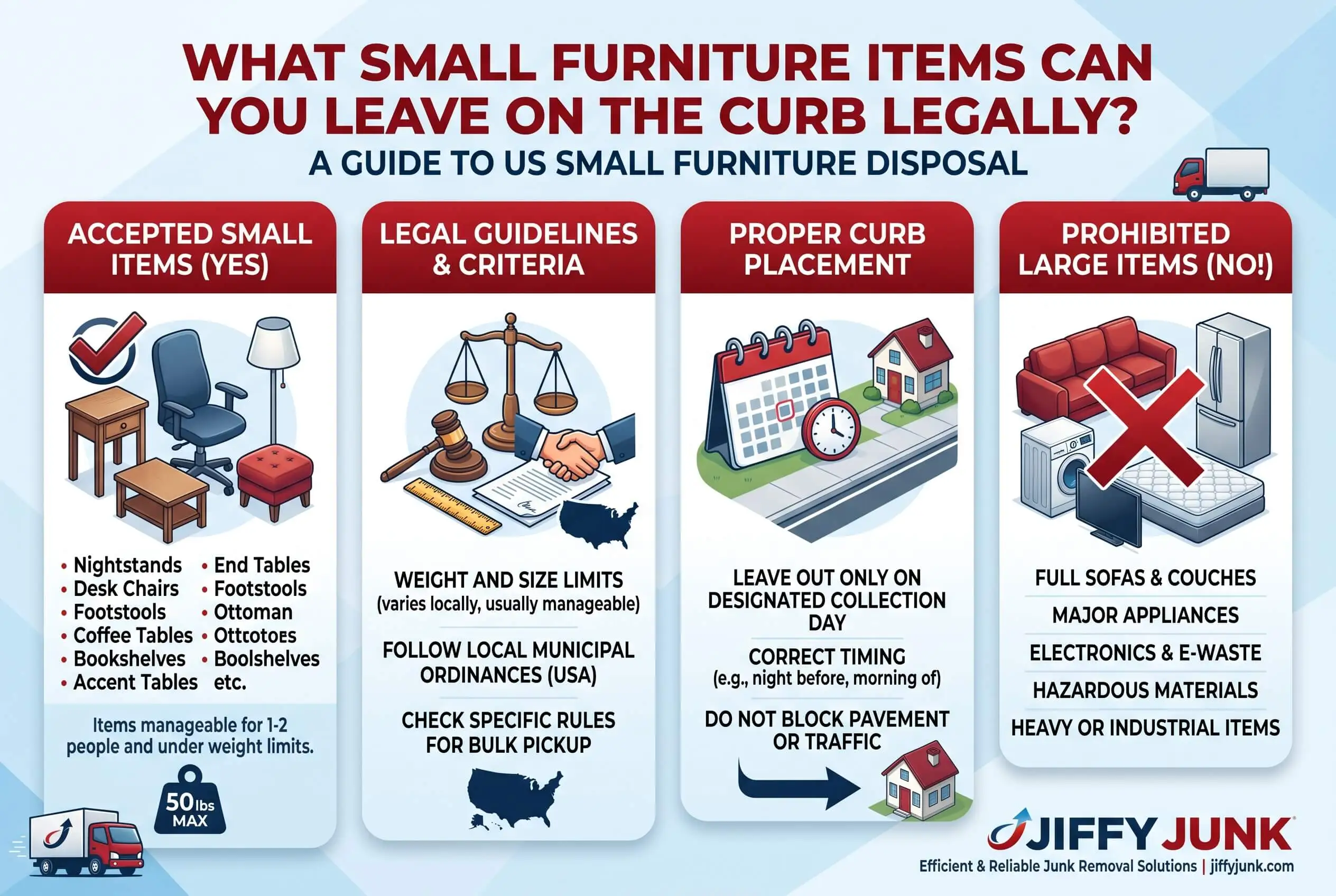
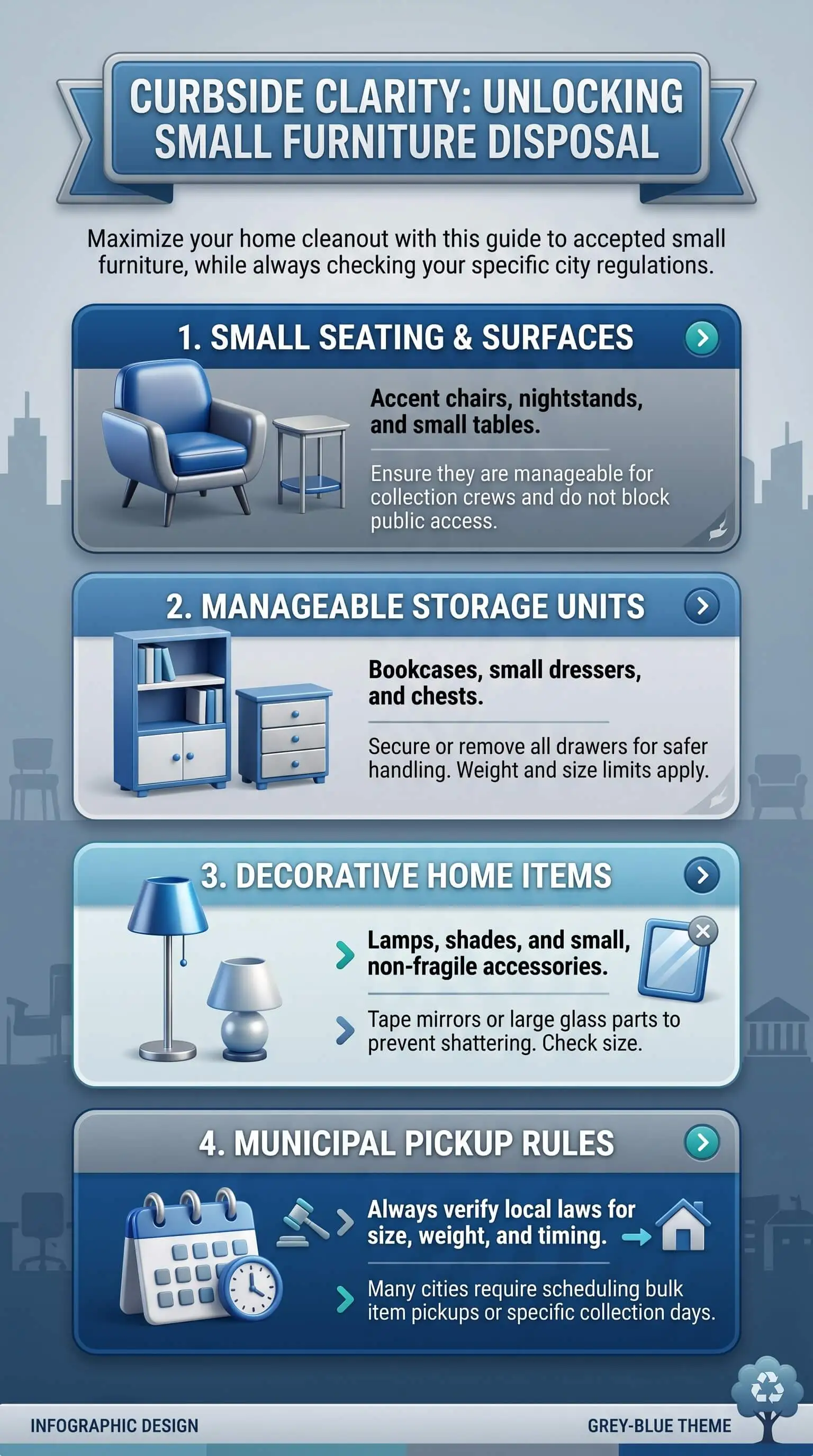
Cities draw the small-furniture line by size, weight, or both. The pieces that usually qualify are end-tables, nightstands, dining chairs, small bookcases, ottomans, and wood TV stands one person can carry. Many cities use a hard threshold on top of that. Fremont, California, caps free bulky-item pickups at four feet long and 150 pounds. The U.S. Environmental Protection Agency files all of it under "furniture and furnishings," a waste category that also covers sofas, tables, chairs, and mattresses.
Two items that look identical can sit on opposite sides of the rule. A solid-wood end-table counts as small furniture. The same end-table with a faux-leather upholstered top could land in the city's "upholstered bulk" category with its own pickup process, especially when bed bug furniture removal rules apply.
What rules actually decide if you can leave it
Four things tend to control whether a curbside drop-off is legal:
• Bulk pickup schedule. Most cities run scheduled bulk-item pickup on a fixed rotation. Denver runs a nine-week cycle. If you place items at the curb outside that scheduled window, the city counts it as illegal dumping, even if the same items would qualify three days later.
• Item count limits. Many municipal programs cap free pickups. San Gabriel, California, allows two bulky items per week at no charge. Anything beyond that incurs a fee.
• Tagging or call-ahead. Some sanitation departments require a phone call, an app submission, or a sticker before a piece can go out. Skip the step and the city red-tags your item, which gives you a short window to remove it before fines kick in.
• Special-handling materials. Mattresses, upholstered furniture, anything with springs or foam, items containing refrigerant, and items with electronic components fall outside standard bulk pickup and need their own program.
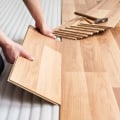
Layered on top of all four: an HOA can prohibit curbside placement entirely, even when the city permits it. If you live in a community with covenants, check those before you check the city site. This is also where renovation timing matters. If you're planning a flooring upgrade, the curbside calendar should be locked in before the install crew arrives, not after.
What you almost always cannot leave on the curb (even if it’s “small”)
A few categories rarely qualify for standard curbside pickup, regardless of size:
• Mattresses and box springs. California, Connecticut, Oregon, and Rhode Island operate stewardship programs through the Mattress Recycling Council with their own collection process. In other states, mattresses still typically require a separate appointment.
• Anything with refrigerant. Mini-fridges and small wine coolers count as appliances, not furniture, and require a refrigerant-recovery step before disposal.
• Items with mercury, batteries, or e-waste. A small entertainment console with a built-in flatscreen is e-waste, not bulk furniture.
• Particle-board pieces destroyed by rain. What started as a small bookcase becomes nuisance debris after a storm soaks it through. Many sanitation crews will refuse it.
• Storm-zone debris timing. In flood-prone areas, including much of South Florida, post-hurricane debris pickup follows a separate schedule. Placing furniture out before the announced window can violate emergency-response rules.
How to verify your local rules in two minutes
The fastest path to a clean answer:
1. Search "[your city name] bulk item pickup" and click the result on a .gov domain first.
2. If the schedule isn't clear, call 311 (or your city's non-emergency line) and ask for the next bulk-pickup date for your address.
3. Check your HOA covenants if you live under one.
4. For mattresses specifically, check ByeByeMattress.com to see if your state runs a free drop-off program.
This step takes longer than dragging the chair to the curb. It also keeps you out of a fine that can run from $150 to $10,000 depending on jurisdiction.
"Across years working with homeowners on flooring installs, the most common cleanout mistake I see is treating the curb like a default. Cities don't see it that way. I've watched plenty of clients set their old dining chairs out on a Tuesday assuming Wednesday's truck would handle it — and come back to find a red tag instead. The fix is boring, but it works every time: pull up your sanitation department's pickup calendar before you order new furniture, not after. Plan the exit before you plan the arrival."
7 Essential Resources
When the curbside route is closed off or the timing won't work, these are the sources homeowners actually use:
5. EPA — Durable Goods: Furniture and Furnishings. Federal data on the volumes Americans throw out and where it ends up. Useful context for why cities keep tightening their bulk rules.
6. EPA — Furniture and Household Garbage and Demolition. Plain-language guidance on how municipal solid-waste districts handle bulky furniture, including post-disaster cleanouts.
7. Bye Bye Mattress (Mattress Recycling Council). Directory of free mattress drop-off sites and curbside-collection programs in California, Connecticut, Oregon, and Rhode Island.
8. Habitat for Humanity ReStore. Accepts donated furniture in usable condition. Many ReStores offer free home pickup, often faster than waiting for the city's bulk day.
9. Goodwill — Donate Stuff. Locator for donation centers and information on which larger items qualify for pickup in your area.
10. Earth911 Recycling Search. Searchable database for furniture and bulky-item recycling near a ZIP code. The fastest way to find a recycler when donation isn't an option.
11. RTS — Furniture Waste: The Forgotten Waste Stream. Industry-side explainer on why furniture is hard to recycle, what "fast furniture" is doing to landfills, and where the recycling infrastructure is heading.
3 Statistics
The numbers behind the rules tell you why cities care so much about how you put furniture out:
12. 12.1 million tons. Americans generated 12.1 million tons of furniture and furnishings as municipal solid waste in 2018, and 80.1% of it went straight to landfill (EPA). Furniture sits among the most-landfilled categories the EPA tracks.
13. 50,000 mattresses a day. Americans discard more than 50,000 mattresses every day, and up to 75% of a mattress can be recycled into new products (Mattress Recycling Council). That's why so many states have moved them out of standard curbside pickup and into stewardship programs.
14. Up to $10,000. California Penal Code 374.3 sets the maximum fine for illegal dumping on public or private property at $10,000, plus possible jail time and the cost of cleanup (CleanLA / Los Angeles County). Other states cap fines lower, but $1,000-plus penalties show up across the country.
Final Thoughts and Opinion
The curb works when you time it right. Schedule the pickup, check the size limits, place the right kind of item, and the system delivers. Treat it as a default and it produces fines, neighborhood complaints, and bulky items sitting waterlogged on the verge for weeks. The cleanout pattern I keep seeing is timing, not knowledge. People know their city has rules. They just don't pull up the pickup schedule until the delivery truck has dropped off the new piece and the old one is jamming the hallway.
If a room refresh or flooring upgrade is in motion, sequence the cleanout this way: confirm the city's bulk-pickup window first, schedule any donations or junk hauls to land a day or two before that window, then order the new furniture. The order matters. Flooring upgrades can move home value substantially, and a delayed install caused by a furniture jam is an expensive problem to absorb.
Frequently Asked Questions
Can I leave furniture on the curb on any trash day?
No. Regular trash days handle bagged household waste. Furniture goes out only on a scheduled bulk-item pickup day, which most cities run on a fixed rotation anywhere from weekly to once every nine weeks. Setting an item out on a regular trash day usually counts as illegal dumping, even if it disappears the next morning.
What size or weight of furniture is small enough to leave at the curb?
Most cities use a four-foot dimension cap and a 100-to-150-pound weight cap. End-tables, dining chairs, ottomans, small bookcases, and nightstands typically qualify. Anything one person can carry alone is usually safe size-wise. Confirm the exact threshold with your city's sanitation department before pickup day, since limits vary.
Can I put a mattress at the curb?
Usually not without a separate program. California, Connecticut, Oregon, and Rhode Island run free mattress recycling through the Bye Bye Mattress program. Other states often require a special pickup appointment or a drop-off at a designated facility. If you leave a mattress out on a regular bulk day in a non-program state, it may sit for weeks before anyone collects it.
What happens if my city won’t pick up the furniture I left out?
You'll typically get a red tag or a written notice giving you a short window, often 24 to 72 hours, to remove the item. Ignore the notice and the city can issue a fine, send a cleanup crew, and bill you for both. In Philadelphia, one prosecution for illegal dumping resulted in over $10,700 in penalties and cleanup costs.
Are donations a faster option than scheduling bulk pickup?
Often yes, if the piece is in usable condition. Habitat ReStore and Goodwill both offer free home pickup in many areas, with turnaround times of two to seven days. Bulk municipal pickup can run a week or longer depending on your city's rotation. Damaged or stained pieces won't qualify for donation and will need a different exit.
Can my HOA fine me for putting furniture on the curb?
Yes. HOA covenants can prohibit curbside placement of bulk items, even on the city's scheduled pickup day, and can attach fines to violations. Check your HOA's specific rules before you put anything out, since they often run stricter than the city ordinance and the penalties can stack on top of municipal fines.
CTA
If your city's pickup window is two weeks out, the piece is too big for standard bulk, or your HOA has already said no, calling a licensed hauler usually beats the alternatives on speed and cost, especially compared to a potential fine. For more on how curbside disposal works alongside professional pickup, see Jiffy Junk's guide to curbside furniture pickup and haul-away.
Got a curb-day story or a city-specific rule worth sharing? Drop it in the comments. Specific local quirks help other homeowners avoid the same fine.